
Table of Contents
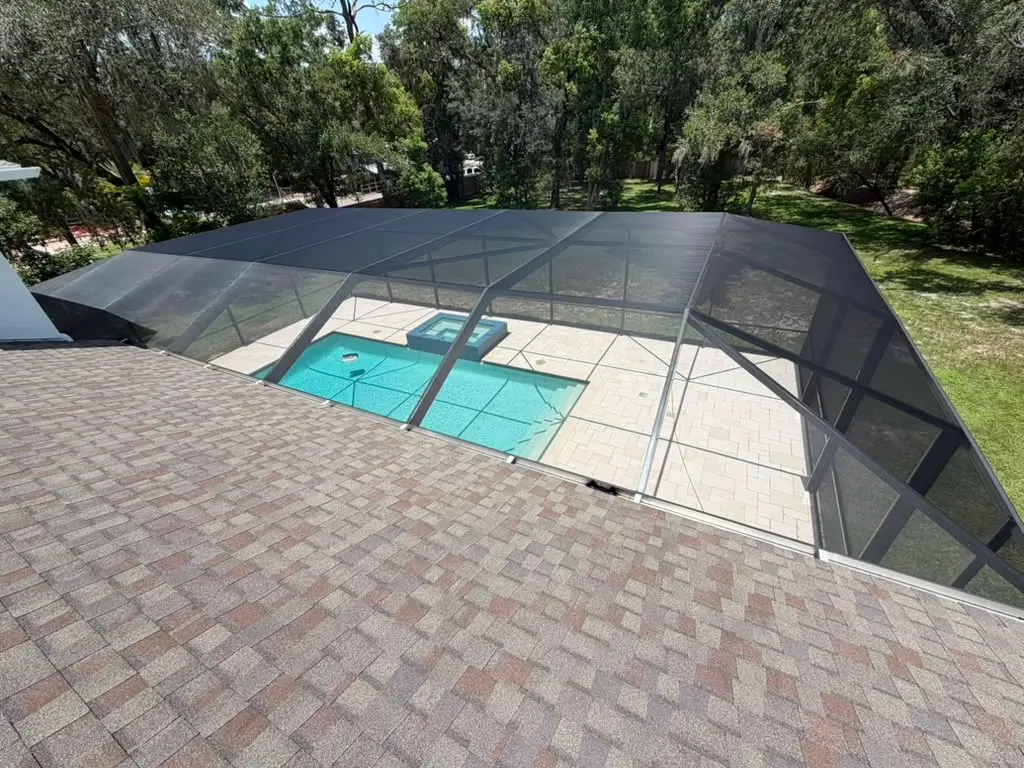
Your pool screen enclosure just went up, and it’s already paying off — fewer bugs, less pool debris, and a more comfortable space to relax in. But like any part of your home, a pool cage needs a bit of routine care to stay in good shape through Florida’s heat, humidity, and storm season. The good news: most maintenance takes just a few minutes a month and can add years to the life of your enclosure.
Here’s a simple, season-by-season approach to keeping your pool cage looking and performing its best.
1. Clean the Screens Regularly
Mesh screens collect pollen, dust, salt air (if you’re near the coast), and general grime over time, which can reduce airflow and make the enclosure look dingy even when it’s structurally fine.
- Rinse monthly with a garden hose on a gentle setting, working from top to bottom.
- Use a soft brush (not a stiff-bristled one) for spots with buildup — avoid pressure washers directed straight at the mesh, since the force can stretch or tear panels.
- Skip harsh chemicals. A mild dish soap and water solution is enough; bleach and abrasive cleaners can degrade mesh fibers and framing finishes over time.
If you’re unsure how your screens hold up to cleaning, our guide on how to clean screens covers gentle techniques that apply just as well to a pool cage as a screened porch.
2. Inspect the Frame and Hardware Twice a Year
Aluminum framing is built to last, but a quick visual check each spring and fall helps catch small issues before they become bigger repairs:
- Look for loose screws, corroded hardware, or gaps where panels meet the frame
- Check that doors close and latch properly — sagging or sticking is often an early sign of a loose hinge or shifted frame
- Inspect the base where footers meet the deck for cracking or separation
Catching these early is far less costly than dealing with a compromised frame after a storm.
3. Watch for Tears, Sags, and Weak Spots in the Mesh
Even quality mesh wears down eventually, especially in high-UV, high-humidity climates like Florida’s. During your seasonal inspection, look for:
- Small tears or fraying near the frame edges (a common early failure point)
- Sagging panels that no longer sit taut
- Discoloration or brittleness, which can signal UV degradation
Small tears can sometimes be patched, but widespread wear usually means it’s time to consider rescreening rather than patchwork repairs. If you’re noticing several of these signs at once, our post on pool cage rescreening walks through what to expect from that process.
4. Keep Pests From Becoming a Problem
One of the main reasons homeowners invest in a screen enclosure is to keep bugs out — but pests like wasps and no-see-ums can still find gaps or nest along the frame if maintenance is neglected.
- Check corners and frame joints for early signs of wasp nests, especially in spring
- Keep sweet drinks, food, and standing water covered or cleared promptly
- If pests are a recurring issue, our guide on keeping wasps away from your patio has prevention tips that apply directly to pool cage areas too
5. Clear Debris From the Roof and Gutters
Leaves, palm fronds, and other debris can collect on the enclosure’s roof panels or in attached gutter systems, especially after storms. Left unchecked, this buildup can:
- Trap moisture against the mesh and frame
- Add unnecessary weight to roof panels
- Clog drainage, leading to water pooling on the enclosure roof
A quick clearing after major storms or seasonal leaf drop goes a long way toward preventing bigger issues.
6. Prep Your Pool Cage Before Hurricane Season
Florida homeowners know hurricane season requires a bit of extra prep, and your pool enclosure is no exception:
- Trim back nearby trees or branches that could fall on the structure
- Remove loose furniture or decor from inside the enclosure before a storm
- After any major storm, do a full inspection of the frame, screws, and mesh before resuming normal use
7. Know When to Call a Professional
Routine cleaning and inspection go a long way, but some issues are best left to experienced hands:
- Significant frame damage or corrosion
- Multiple panels needing rescreening
- Structural shifting near the footers
- Storm damage affecting the enclosure’s integrity
A qualified pool enclosure contractor can assess whether a repair or a full rescreening makes more sense, and can often complete the work faster and more durably than a DIY fix.
Keep Your Pool Cage in Top Shape
A little consistent care keeps your screen enclosure doing its job — keeping bugs out, debris down, and your pool area comfortable — for years to come. If you’re due for an inspection, considering a rescreen, or just have questions about maintaining your enclosure, the team at Eclipse Service Hub is happy to help.
Contact us for a maintenance inspection or browse our full pool screen enclosure services to learn more.