
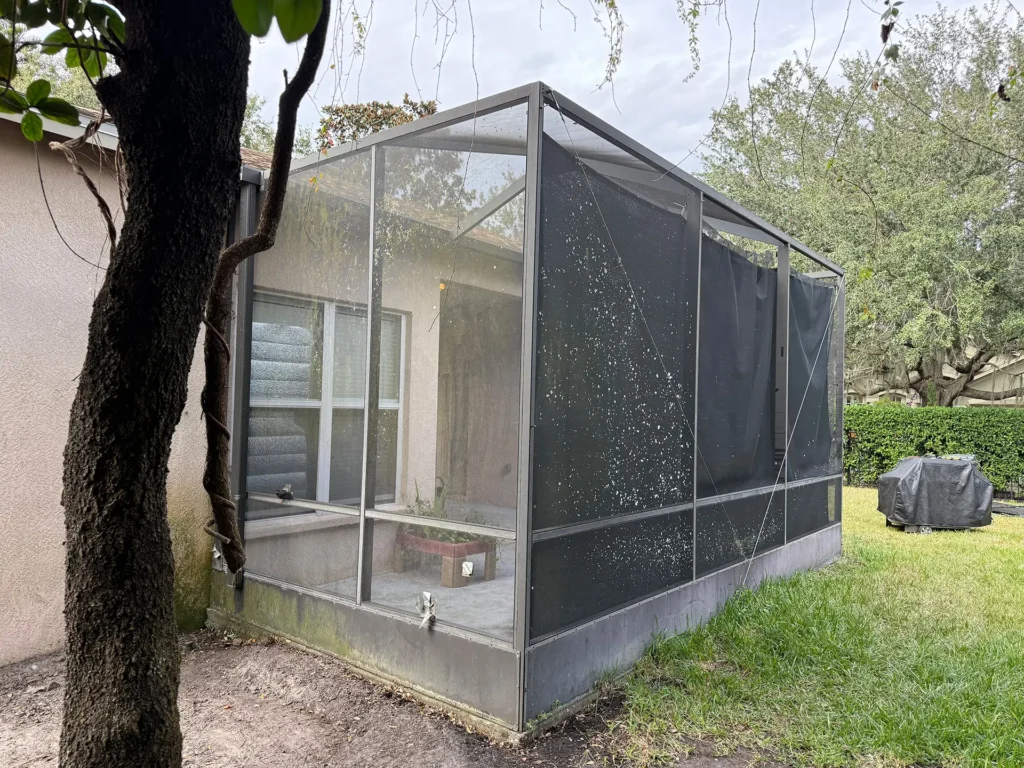
Florida is hard on anything built outdoors. Sun beats on it for most of the year, humidity never really lets up, afternoon storms arrive without much warning, and hurricane season tests every fastener and frame on the property. If you are planning aluminum screen room installation in Florida, or looking into screen porch enclosures installation in Florida, the material holding the whole structure up is the single most important decision you will make.
For nearly every screen enclosure in the state, from pool cages to porch screening, that material is aluminum. This guide explains why, how it compares to the alternatives, and what to look for beyond the metal itself.
The Short Answer
Aluminum is the best choice for Florida screen enclosures because it does not rust, handles heat, humidity and rain without rotting or warping, is strong for its weight, and needs very little maintenance. Those traits matter more in Florida than almost anywhere else in the country.
1. Aluminum Does Not Rust
Steel rusts because iron reacts with oxygen and moisture. Aluminum does not contain iron, so it cannot rust. Instead, bare aluminum forms a thin, stable oxide layer on its surface that protects the metal underneath.
In a state with high humidity, frequent rain and, along the coast, salt in the air, this is a major advantage. Rust-proof framing is the reason aluminum screen rooms, porch enclosures and pool cages hold up year after year without the flaking, staining and structural weakening that corroded steel can cause.
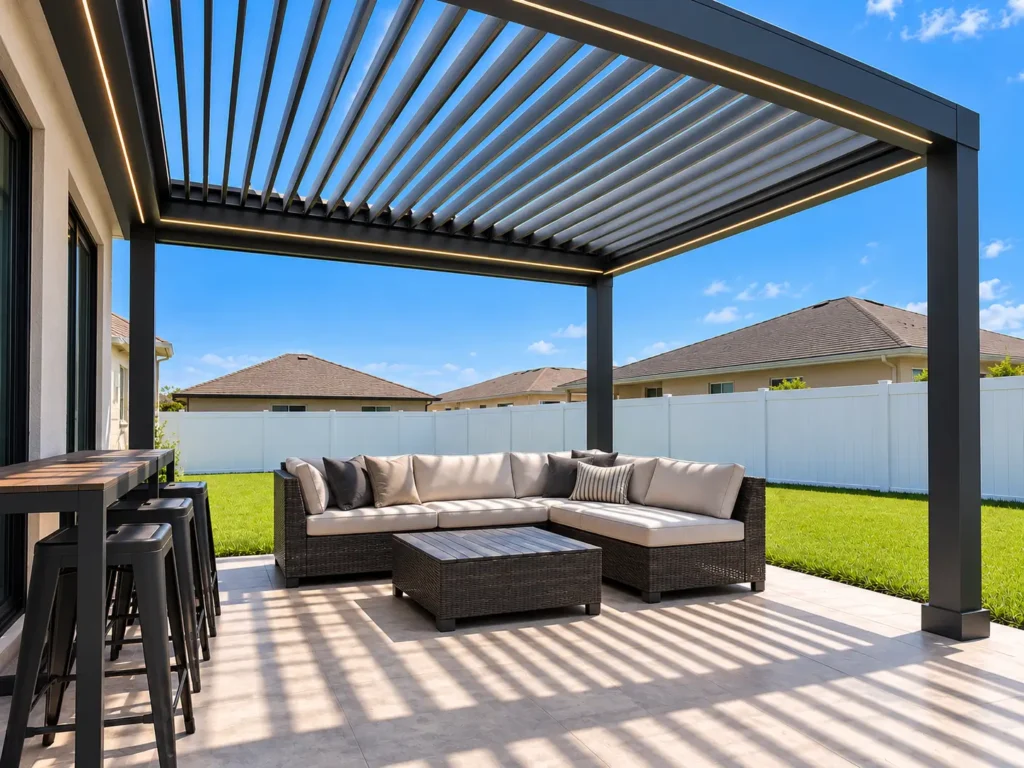
2. It Does Not Rot, Warp or Feed Termites
Wood is a natural fit for a screened porch in cooler states, but Florida’s moisture, heat and insects work against it. Wood framing absorbs moisture, can rot, and is vulnerable to termites, which means regular sealing, painting and inspection to keep it sound.
Aluminum is not food for insects, does not absorb water, and holds its shape through repeated cycles of sun and rain. For a structure meant to sit outside permanently, that predictability is worth a lot.
3. Strength Without the Weight
Aluminum has a high strength-to-weight ratio. Framing members can be engineered to carry the loads a Florida enclosure faces, including wind, without the bulk and mass of heavier materials. A lighter frame is also easier to install cleanly and to tie into an existing slab and home structure.
That strength is only meaningful when the structure is designed properly. At Eclipse Service Hub, every enclosure is built from hurricane-rated, USA-made aluminum and is engineered to meet Florida building code. Aluminum is the right material, and engineering is what turns it into a structure that performs.
4. Low Maintenance for Florida Homeowners
Most people want a screened space they can use, not one they have to keep repairing. Aluminum framing needs very little upkeep compared to wood. There is no sanding, staining or repainting cycle, and no treatment against rot.
Routine care is simple: rinse the frame and screens periodically, check fasteners and hardware, and inspect the enclosure after major storms. For cleaning tips, see our guide on how to clean screens on a porch.
5. It Supports the Features You Actually Want
A good frame is the base for everything else. Aluminum construction makes it possible to add:
- Insulated roof panels (sandwich panels with a foam-insulated core) for shade, cooler temperatures and rain protection
- Structural aluminum beams for larger spans and screen rooms
- Electrical-ready beams so a licensed electrician can wire ceiling fans and lights
- Matching gutters and downspouts for clean drainage
- Custom entry doors and hardware fitted to the frame
- Optional slab extension when the existing patio or porch is too small
Frames are available in white or bronze, so the enclosure can match your home’s trim and roofline.
Aluminum vs. Other Frame Materials
| Aluminum | Wood | Steel | |
|---|---|---|---|
| Rust and corrosion | Does not rust | Not applicable, but vulnerable to moisture | Rusts without protective coatings |
| Rot and termites | Not affected | Vulnerable | Not affected |
| Weight | Light, with high strength | Heavier | Heaviest |
| Upkeep in Florida | Low | High (sealing, painting, inspection) | Moderate to high (coating maintenance) |
| Typical use in Florida enclosures | Standard choice | Rare for permanent enclosures | Uncommon |
Aluminum Frame vs. Aluminum Mesh: Not the Same Thing
When homeowners hear “aluminum” in the context of screen enclosures, it can refer to two different parts of the system:
- Aluminum framing is the structure itself: posts, beams, rails and roof supports.
- Aluminum mesh is one of several screen material options, a rigid, ultra-durable mesh that resists rust, wear and deformation.
Aluminum mesh is best used where impact is likely, such as high-traffic doors and lower wall sections. For the main screen area, other options often work better:
- Fiberglass mesh: flexible, rust-proof and the standard choice for most homes
- Pet-resistant mesh: coated polyester built to handle scratching and clawing
- Solar screen mesh: blocks up to 90% of harmful UV rays to cut glare and heat
- High-visibility mesh: a finer weave for clear views and airflow
- No-see-um mesh: an ultra-fine weave for biting insects in humid, coastal or marshy areas
A common approach is a rust-proof aluminum frame with fiberglass or high-visibility mesh on the upper panels, and pet-resistant or aluminum mesh on the lower panels and door.
Aluminum Screen Rooms: Where the Material Really Shines
An aluminum screen room is a fully framed outdoor room with an insulated roof, built on a slab you already have or one that is extended. Because the frame, beams and roof system are all aluminum, the structure resists the moisture and heat that wear down other materials, while the insulated roof adds shade and temperature control.
Screen rooms can use insulated, flat or pan, or gable roof designs, and can be custom-built around your home’s shape. If you want an outdoor dining area, a shaded lounge, or a protected space for a hot tub, it is one of the most practical ways to expand your living space.
Learn more about aluminum screen room installation in Florida.
Screen Porch Enclosures: Aluminum for Front and Back Porches
The same material advantages apply to porches. Whether you are screening a front entry, a covered back porch, or an open porch that needs a new roof, aluminum framing gives you a clean, low-profile structure that stays straight and rust-free.
Eclipse Service Hub builds screen porch enclosures for existing covered porches, upgraded front entries and back patios, with options for insulated roof panels, custom screen doors, white or bronze frames, and matching gutters. See our screen porch enclosures installation in Florida for details.
What Else Matters Besides the Metal
Aluminum is the right foundation, but a few other factors decide whether an enclosure lasts:
Engineering and code compliance. Florida enclosures should be engineered and built to code, with permits where required. Permits are often required depending on the structure type.
Fasteners and hardware. Frames are only as durable as the connections that hold them. Corrosion-resistant hardware matters in humid and coastal areas.
Roof design. Hip roofs are known for strong wind resistance, while mansard, dome and gable roofs each offer different interior height and airflow. Your installer should explain which style fits your lot and exposure.
Who does the work. Look for a licensed, insured contractor with an in-house crew. Eclipse Service Hub uses its own builders with no subcontractors.
Roof choice. Insulated panels give rain protection and support fans and lights. A mesh roof offers open airflow but does not keep out rain.
Is Aluminum Right for Every Project?
For the large majority of Florida screen enclosures, yes. The exceptions are usually design-driven rather than performance-driven, for example when a homeowner wants a specific architectural look and plans a fully different structure. If you are unsure, a free on-site inspection is the best way to confirm what suits your home.
Frequently Asked Questions
Why is aluminum used for Florida screen enclosures?
Aluminum resists rust, does not rot or attract termites, holds its shape in heat and humidity, is strong for its weight, and requires little maintenance. Those traits suit Florida’s climate.
Does aluminum rust?
No. Aluminum does not contain iron, so it does not rust. It forms a thin protective oxide layer instead.
Is an aluminum screen room hurricane-ready?
Eclipse Service Hub builds screen rooms from hurricane-rated, USA-made aluminum and fasteners, engineered to Florida building code. As with any structure, performance depends on proper engineering, installation and roof design.
What roof options are available for an aluminum screen room?
Insulated roofs, flat or pan roofs, and gable roofs. Insulated roof panels provide shade, cooling and rain protection. Mesh roofs maximize airflow but do not keep out rain.
Can I add ceiling fans or lights?
Yes. Insulated roof panels support fans and light fixtures, and electrical-ready beams allow a licensed electrician to wire them.
Do screen rooms and porch enclosures need permits in Florida?
Often yes, depending on the structure type. Eclipse Service Hub handles the engineering and permitting.
Can you build on my existing slab?
Yes, or the slab can be extended if more space is needed.
How long does installation take?
Screen room projects typically take 1-3 days after engineering and permits are approved. Porch and lanai screening is typically 1-2 days once permits and materials are ready.
What is the difference between aluminum framing and aluminum mesh?
Framing is the structure. Mesh is the screen material. Aluminum mesh is a rigid option best for doors and lower wall sections, while fiberglass, pet-resistant, solar, high-visibility and no-see-um mesh suit other needs.
Plan Your Aluminum Screen Room or Porch Enclosure
The best screen enclosure starts with the right material and is finished with proper engineering, quality screening and clean workmanship. Aluminum gives you the first part. A skilled local team handles the rest.
Eclipse Service Hub is a licensed and insured screen enclosure company serving the Tampa Bay area, Sarasota and Bradenton, and Southwest Florida. Call (813) 743-3003 or request a free on-site estimate to plan your aluminum screen room or porch enclosure.
Internal Linking Suggestions
| Anchor text | Destination URL | Placement guidance |
|---|---|---|
| aluminum screen room installation in Florida | https://eclipseservicehub.com/service/aluminum-screen-room/ | Intro paragraph (first mention of primary keyword) and the “Aluminum Screen Rooms” section |
| screen porch enclosures installation in Florida | https://eclipseservicehub.com/service/porch-screen-enclosure/ | Intro paragraph and the “Screen Porch Enclosures” section |
| lanai screen enclosure | https://eclipseservicehub.com/service/lanai-screen-enclosure/ | “What Else Matters” or screen room section |
| patio screen enclosure | https://eclipseservicehub.com/service/patio-screen-enclosure/ | Mesh or aluminum screen room section |
| pool screen enclosure | https://eclipseservicehub.com/service/pool-screen-enclosure/ | Roof design bullet in “What Else Matters” |
| how to clean screens on a porch | https://eclipseservicehub.com/blog/how-to-clean-screens-on-porch/ | “Low Maintenance” section |
| pool screen enclosure guide | https://eclipseservicehub.com/blog/pool-screen-enclosure/ | Roof design bullet |
| screen enclosure services | https://eclipseservicehub.com/services/ | Intro or “Short Answer” |
| service areas | https://eclipseservicehub.com/service-areas/ | Closing section |
| free on-site estimate | https://eclipseservicehub.com/get-estimate/ | Closing CTA |
Reverse links to add: link back to this post from the aluminum screen room page (for example, a “Why aluminum?” callout near the benefits section) and from the porch page.
Items to Confirm With Client Before Publishing
- General material claims. The statements that aluminum does not rust, does not rot or attract termites, and has a high strength-to-weight ratio are general materials facts, not taken from the site. Confirm you are comfortable with them.
- Frame finish. The site lists white or bronze but does not say whether frames are powder-coated or anodized. The post does not claim either. Add it if the client confirms.
- Wood and steel comparison. The comparison table is general and does not name competitors.
- Hurricane language. Kept to the site’s wording (“hurricane-rated, USA-made aluminum and fasteners,” “engineered to meet Florida building code”). No claim of storm-proof.
- Timing figures. 1-3 days for screen rooms and 1-2 days for porch/lanai, both from the service pages.
- No pricing included, per standing instruction.
- Porch page FAQ error. On the live porch page (/service/porch-screen-enclosure/), the FAQ answers are shifted one row from their questions (for example, “How long does installation take?” shows the fan/lights answer, and “How much does a porch enclosure cost?” shows “White or bronze aluminum framing”). Worth fixing since the porch page is linked from this post.