
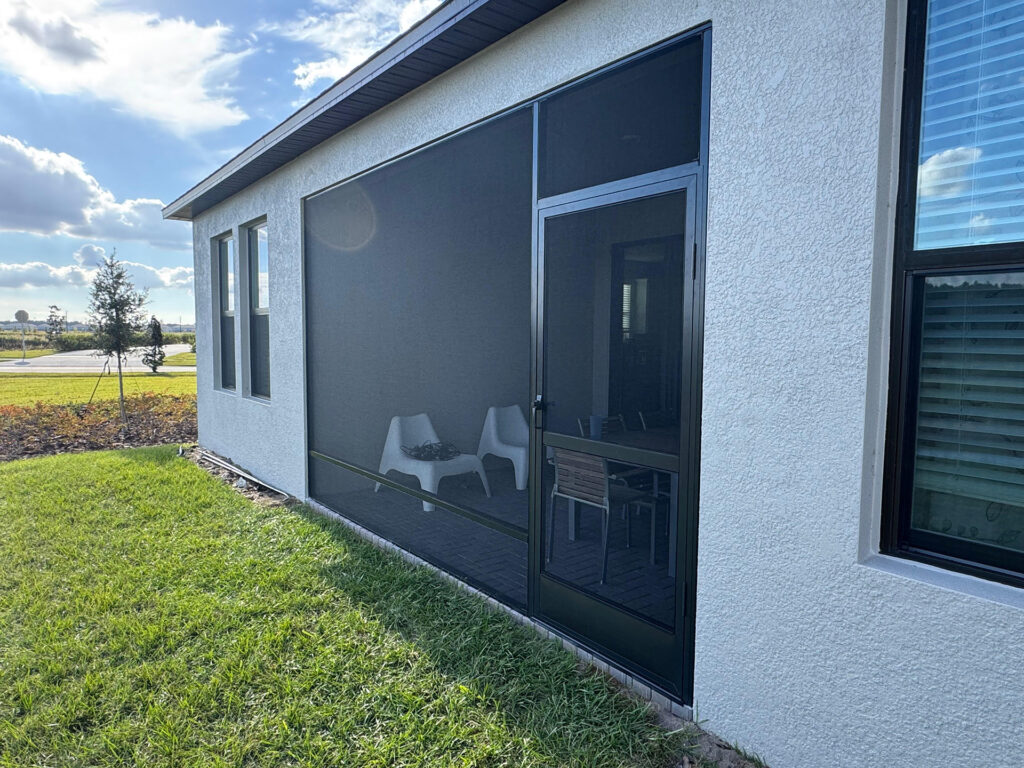
For years, a screened patio meant one thing: silver aluminium framing, standard mesh, and a shape dictated purely by function. That default still works fine but it’s no longer the only option, and more Tampa homeowners are treating their screened patio as a real extension of the home’s design rather than an afterthought bolted onto the back of it.
Here’s what’s actually shifting in how these spaces are being designed right now.
Table of Contents
Framing Finishes Are Moving Away from Standard Silver
Bronze, black, and matte finishes have become a common upgrade from the traditional mill-finish aluminum look. A darker frame tends to recede visually against landscaping and shadow, while a lighter or bronze tone can complement stucco and warmer exterior palettes common across Tampa neighborhoods. The shift is subtle, but it changes how “built-in” the enclosure feels against the house rather than looking like a separate structure.
Roof Shape as a Design Statement, Not Just a Function
Roof style used to be chosen almost entirely for practicality rain runoff, wind performance, cost of materials. Now it’s increasingly treated as an architectural decision in its own right. Homeowners with more traditional or Craftsman-style homes are leaning toward gable rooflines that echo the house’s existing shape, while more contemporary builds are embracing dome or mansard designs specifically because of how distinctive they look. If you’re weighing which direction fits your home, our full roof style comparison breaks down the options in more depth.
Mixed Mesh and Clear Panel Combinations
Rather than screening an entire patio uniformly, some designs now mix standard mesh sections with clear acrylic or vinyl panels — often along one wind-exposed side or a section facing a less private direction. This hybrid approach keeps the airflow and pest-blocking benefits of mesh (see our guide on choosing the right mesh for Tampa’s climate) while adding a bit more weather protection or privacy exactly where it’s needed, instead of applying the same solution to every wall.
Blending the Enclosure Into the Landscaping
Rather than treating the screen enclosure as a hard edge between “yard” and “patio,” more designs are softening that transition with landscaping that runs right up to (or even partially around) the structure. Potted plants along the interior perimeter, climbing greenery trained near support posts, and landscaping lighting positioned to wash up the framing all contribute to a look where the enclosure feels like part of the yard’s design rather than a box dropped onto it.
Multi-Zone Patios Instead of One Big Open Space
Larger screened patios are increasingly being laid out with distinct zones rather than one uniform open area a dining section, a separate lounge area, sometimes a small outdoor kitchen or bar zone, each defined through furniture arrangement, rugs, or overhead lighting rather than additional walls. This mirrors how a lot of homeowners already think about indoor open-concept living spaces, just applied outdoors.
Lighting Is Getting More Intentional
Overhead fans and a single porch light used to be the standard. Now, layered lighting string lights along the roofline, low-voltage path lighting near seating areas, and even integrated fixtures built into the framing itself is becoming a common upgrade. It extends how late a patio genuinely feels usable, well past sunset, without relying on a single harsh overhead light.
Durability Is Part of the Design Conversation Now
Design trends aren’t only about appearance mesh and framing choices built for durability are increasingly discussed alongside aesthetics rather than treated as a separate, purely practical decision. Homeowners are asking upfront how a chosen finish or mesh type will hold up over years of Tampa sun and storms, not just how it looks on day one. That shift reflects a broader trend toward treating the patio as a long-term investment in the home rather than a quick add-on.
What Ties These Trends Together
Almost every shift above points in the same direction: homeowners want their screened patio to feel like an intentional part of the house’s design, not a separate structure that happens to be attached to it. That means finish choices that complement the home, layouts that mirror how the space is actually used, and materials chosen with both looks and longevity in mind.
Bring These Ideas to Your Own Patio
Design trends are a helpful starting point, but the right combination for your home depends on your architecture, your yard, and how you actually plan to use the space. Eclipse Service Hub can walk through framing finishes, roof styles, and layout options specific to your Tampa property, rather than a one-size-fits-all recommendation.
Schedule a design consultation or explore our full patio screen enclosure services in Tampa to see these ideas applied to real projects.
Frequently Asked Questions
Does a screened patio need to be fully replaced after a certain number of years?
Rarely. In most cases, only the mesh needs replacing over time — the aluminum frame typically remains sound for decades with basic maintenance.
Does salt air really make a noticeable difference in lifespan?
Yes. Homes closer to the Bay or coastline tend to see faster hardware corrosion and mesh wear compared to inland properties, simply due to consistent salt exposure.
Can storm damage shorten a screened patio’s overall lifespan?
It can, particularly if damage goes unnoticed or unaddressed. A prompt post-storm inspection helps catch issues before they compound over time.
Is there a mesh type that lasts longer in Tampa’s sun?
Higher-quality and UV-resistant mesh options generally outlast standard fiberglass screening, especially on panels with heavy direct sun exposure.
How do I know if my patio’s mesh is nearing the end of its lifespan?
Signs like discoloration, brittleness, sagging, or frequent small tears are the main indicators — covered in more detail in our rescreening guide.